
Energy retail is entering a new phase.
For much of the last decade, progress was measured by how many “smart” products a retailer could launch: apps, dashboards, dynamic tariffs, devices, pilots and programmes. Innovation was visible and often disconnected from outcomes.
In 2026, that definition of success no longer holds.
What will matter is simpler and harder: whether retailers can consistently deliver measurable value for customers and the grid - at scale, in real time and profitably.
This shift is being driven as much by economics as by the energy transition itself. Traditional retail margin pools are shrinking, on average, by around 1% each year, while the fastest-growing value over the next decade sits in energy solutions, flexibility and optimisation. Standing still is no longer neutral. It is a slow erosion of relevance.
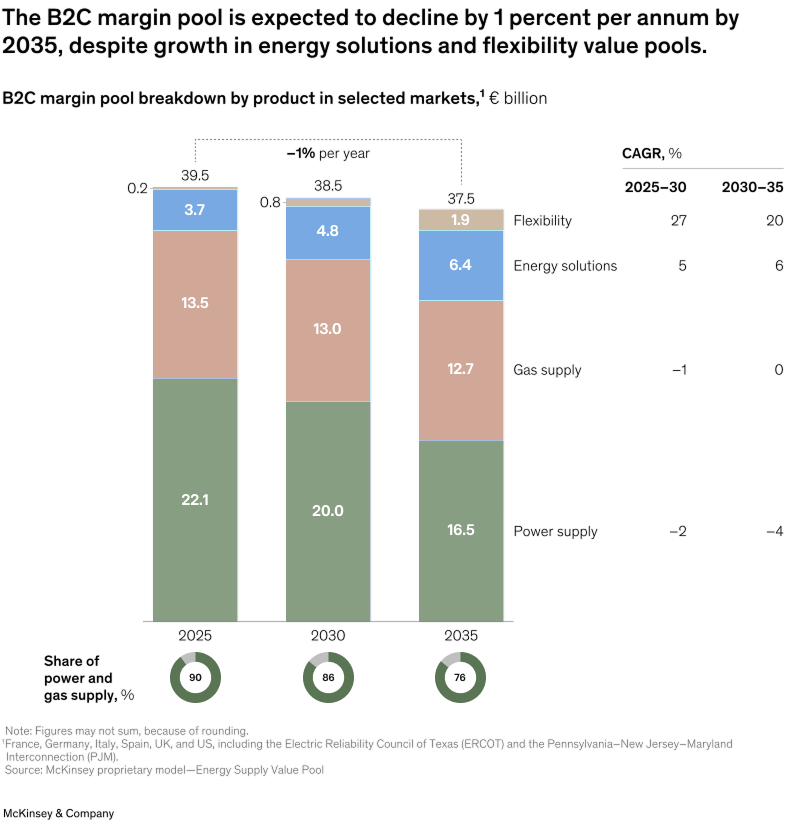
Retailers face growing pressure to run leaner operations, unlock new value streams and prove that digital investment actually improves both customer outcomes and system performance. At the same time, they must manage a more complex system than ever before: more renewables, more electrification, more devices, more data and more volatility.
Against this backdrop, five shifts will shape the year ahead in energy retail:
- From reactive retail to real-time Energy Intelligence
- Turning volatility into predictability
- From building capacity to orchestrating the system
- Less fragmented billing, more aligned outcomes
- From managed energy to effortless energy
Together, they signal the arrival of real-time retail where tariffs, devices, data and market design finally align around outcomes rather than promises.
1. From reactive retail to real-time Energy Intelligence
The energy system has outgrown its old playbook.
We’re seeing mainstream adoption of EVs, heat pumps and batteries. Renewable power is abundant at some moments and scarce at others. Yet much of the system still waits for imbalances to appear before responding.
That approach will not survive 2026.
In this sense, energy is starting to look less like a traditional utility and more like modern financial services. Just as fintech moved banking from once-a-month statements to real-time balances and transactions, energy is shifting from retrospective billing to real-time visibility and action. Customers increasingly expect to see what’s happening now, not what happened weeks ago.
Of course, energy is physical infrastructure, not pure software: electrons can’t be moved around as easily as money. But the logic of real-time intelligence and transparency is converging in energy.
What’s held energy retail until now is that retailers have often possessed data without sight and automation without strategy. Systems have been fragmented, decisions have been delayed and information has reached customers only retrospectively, bundled up in a monthly bill that feels detached from how energy actually behaves in their lives. The result was opacity for customers and risk for the grid.
In 2026, the breakthrough comes from integrating signals directly into operational control. Smart meters, connected devices, wholesale markets and network conditions are brought together into a single real-time view. That visibility allows retailers to anticipate stress before it appears on the grid, shift demand before prices spike and align tariffs with actual system conditions rather than historical averages.
This is where retail operations, data intelligence and grid outcomes converge and where energy starts to behave like a modern digital service rather than a legacy utility. Instead of a backward-looking monthly statement, customers gain real-time access to energy transactions whenever they want them: how their devices are operating right now, when energy is cheap or scarce at that moment and how their choices are interacting with the wider system as it happens.
When Energy Intelligence works, three things improve together: customers experience greater transparency and more predictable costs in real time, retailers reduce operational risk and the grid becomes easier to balance.
Intelligence stops being a back-office capability and becomes the core product of modern retail: the engine that makes energy feel immediate, responsive and trusted rather than distant and bureaucratic.
2. Turning volatility into predictability
Clean power is making the system greener and more volatile.
As renewables grow, prices swing more sharply. Scarcity drives extreme spikes; oversupply increasingly pushes prices below zero. Europe’s surge in negative prices in 2025 was not a one-off anomaly; it was a preview of a more variable system.
For households, this volatility shows up as unpredictable bills. For retailers, it creates rising exposure to wholesale risk and margin pressure. Simply passing prices through is no longer sustainable for either side.
In 2026, differentiation in retail shifts from just the “cheapest tariff” to the best at fully solving for the reasonable demands of the consumer: cost, comfort, carbon and convenience.
Retailers that combine flexibility with Energy Intelligence can smooth price swings by shifting demand, timing consumption and aligning devices with system conditions. They can turn chaotic markets into calmer outcomes for customers while protecting their own economics.
In effect, the best retailers will start to look less like pure energy suppliers and more like risk managers: smoothing volatility for customers the way insurers pool and manage risk across many users.
This quietly reframes the purpose of tariffs. The central question is no longer whether energy is green; that is fast becoming the baseline. The new question is: does my energy retailer provide clarity?
In a high-renewables world, the most valuable tariffs won’t just be cheaper. They’ll be more predictable, convenient and clearer.
3. From building capacity to orchestrating the system
For most of modern history, energy transitions moved at the pace of heavy infrastructure: measured in decades, not years. New generation plants, transmission lines and distribution upgrades require long planning cycles, capital and political alignment.
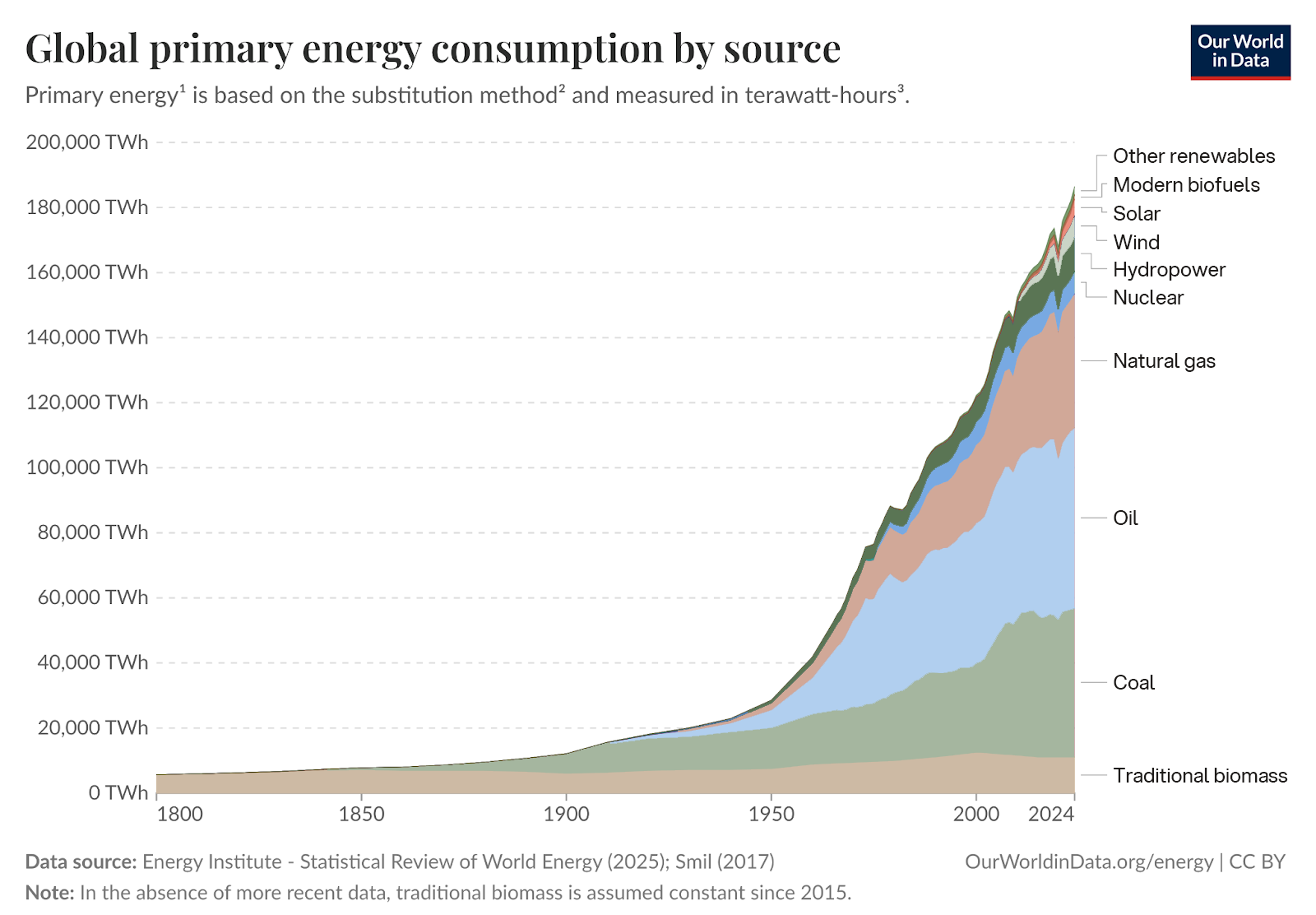
That reality hasn’t changed, but demand has.
Electrification is accelerating faster than networks can be built. This is why the traditional “build more infrastructure” playbook is starting to hit its limits.
In 2026, a more radical shift takes shape: capacity is no longer created only by construction. It is created by orchestration.
Flexibility becomes the fastest, cheapest form of grid reinforcement. Batteries, EVs, heat pumps and smart buildings act as distributed resources that expand effective capacity without pouring concrete.
This mirrors what happened in telecoms: operators didn’t only build more towers, they used smarter software to route traffic, balance loads and get more performance from the same network. Of course, in energy, physical constraints make storage and timing even more critical.
Falling battery costs accelerate this transition. Storage moves from niche asset to mainstream flexibility resource, but only when paired with intelligent retail control. This changes the competitive terrain for retailers: success will depend less on tariffs alone and more on hardware-plus-software bundles that make flexibility reliable at scale.
Resilience also moves up the agenda. Climate events, grid strain and cyber risks are sharpening awareness of security of supply, especially for businesses. EVs and batteries are increasingly seen not just as energy assets, but as backup power and insurance against disruption.
Retailers that can intelligently coordinate these assets across homes and businesses will sell something far more valuable than price: reliability, resilience and predictability.
4. Less fragmented billing, more aligned outcomes
Today, billing is largely backward-looking: you used X energy, here is Y cost. In 2026, billing begins to reflect system outcomes, not just consumption.
As Energy Intelligence improves, retailers can design tariffs that reward behaviour that genuinely helps the grid in real time, not just at month end. Bills become less of a receipt and more of a feedback loop between customers and the system.
This tightens the link between four things that have often sat apart:
- Retail operations: moving from manual fixes to real-time optimisation
- Data intelligence: integrating meters, devices and markets into one view
- Customer outcomes: real-time visibility and clearer value
- Grid outcomes: fewer constraints, less volatility, smoother balancing
Markets with strong smart-meter coverage and dynamic pricing already hint at this direction of travel. When data is connected rather than fragmented, billing stops being a lagging indicator and becomes a system tool.
5. From managed energy to effortless energy
Customers do not want to become amateur energy managers.
In 2026, simplicity stops being a marketing claim and becomes a system design principle. The best customer experiences will feel invisible: devices adjust automatically, costs are minimised in the background and support issues are resolved before customers even notice them.
This is where energy intelligence meets operations at scale.
Automation dramatically reduces friction for households, but it also improves trust because customers experience fewer surprises. At the same time, according to strategic consulting firm, McKinsey, AI and real-time optimisation can reduce operating costs across customer service, operations, marketing and energy management by 15 - 20%.
Retailers that still rely on complex opt-ins or constant behavioural nudges will struggle to keep customers engaged. The ones that succeed will be those that quietly act in the customer’s best interest while stabilising the grid.
When energy works properly, nobody notices. That is not a failure of engagement. It is a success of design.
Real-time retail is here
Taken together, these shifts mark a deeper transition.
As value moves away from pure commodity supply and toward flexibility and optimisation, real-time retail becomes the foundation of long-term profitability and system stability.
The era of product-led retail is giving way to the era of intelligence-led retail. Retailers that win will embed Energy Intelligence into every part of their business: operations, tariffs, billing, devices and customer experience.
Energy retail is no longer about what companies say they support. It is about what their systems can orchestrate, what their bills can demonstrate and what their grids can sustain.
That transition begins in 2026 and once it starts, there is no going back.

