
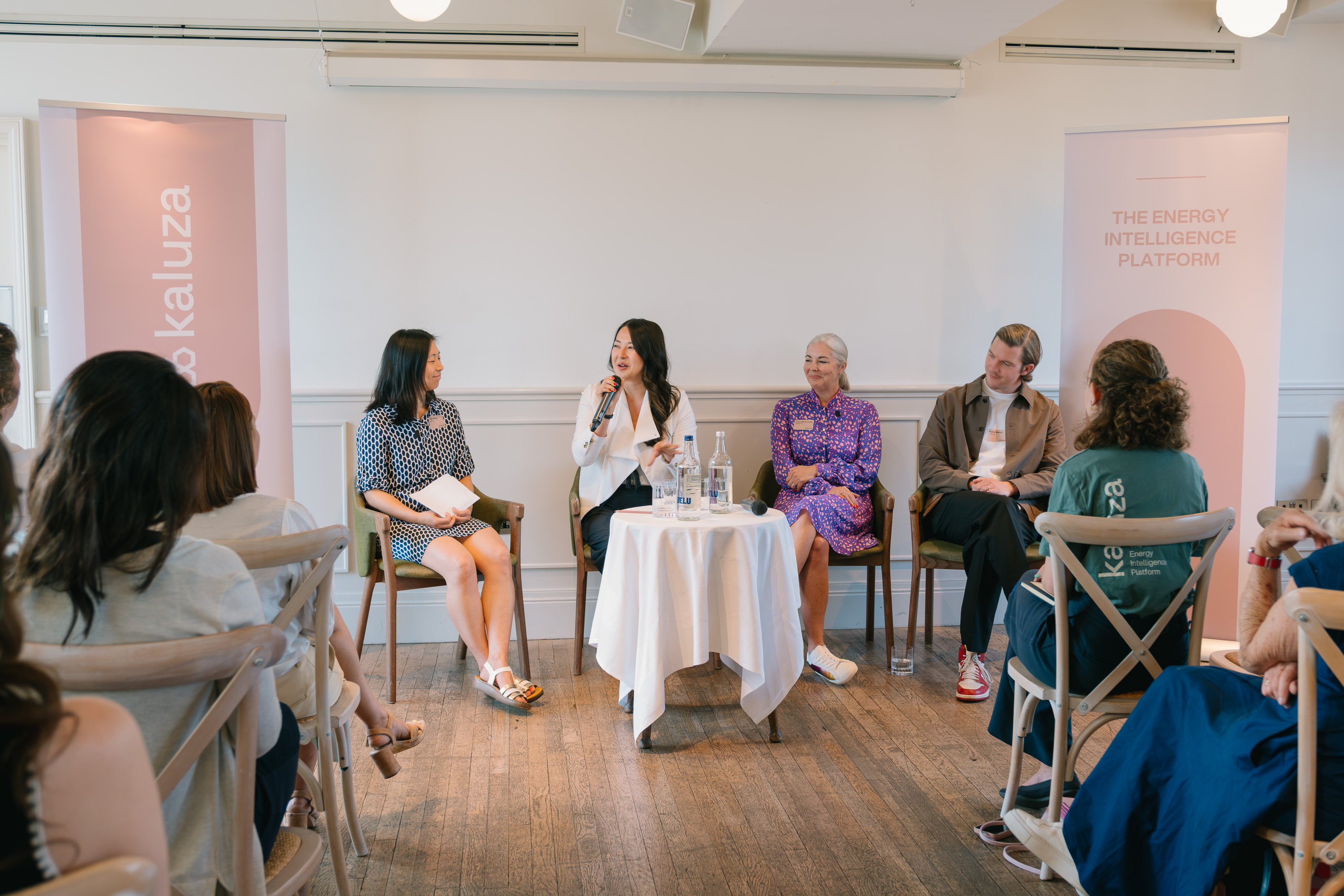
Yesterday, Kaluza hosted another successful Breakfast Club event in London, bringing in some of the most experienced experts from the world’s leading software, data and AI companies. We’ve co-built the software platform to orchestrate billions of data points into a single, self-balancing network that will support an electrified energy system. The Breakfast Club’s discussion was focused on the future of energy software in the age of AI: Is it the end of SaaS? And if so, what’s next?
Enterprise energy software has moved from on-premise, through a hybrid period, to SaaS. Each era changed three things: how software was priced, who owned the stack, and what the vendor relationship looked like. On-prem meant you owned and ran everything. SaaS moved that to licensed access, operated by your teams. It was a good model for software whose job was to show you the work: dashboards, workflows, data retrieval.
Now, as AI converts software from showing you the work to doing it, and there’s an increasing need to orchestrate millions of devices in real time, the same three questions are back on the table:
- Ownership: who owns the stack, the intelligence, and the customer relationship, you or the platform you now depend on?
- Pricing: if you're not paying for seats, what are you paying for, and does the gauge move to outcomes?
- Service: what happens to the vendor relationship when software runs on your behalf rather than being operated by your team?
To tackle these questions, Kaluza’s VP of Product Barb Wong moderated a discussion at Breakfast Club with leaders from three partners that represent the full chain of software decisions, and Kaluza works with to build and maintain our industry-leading energy intelligence platform.
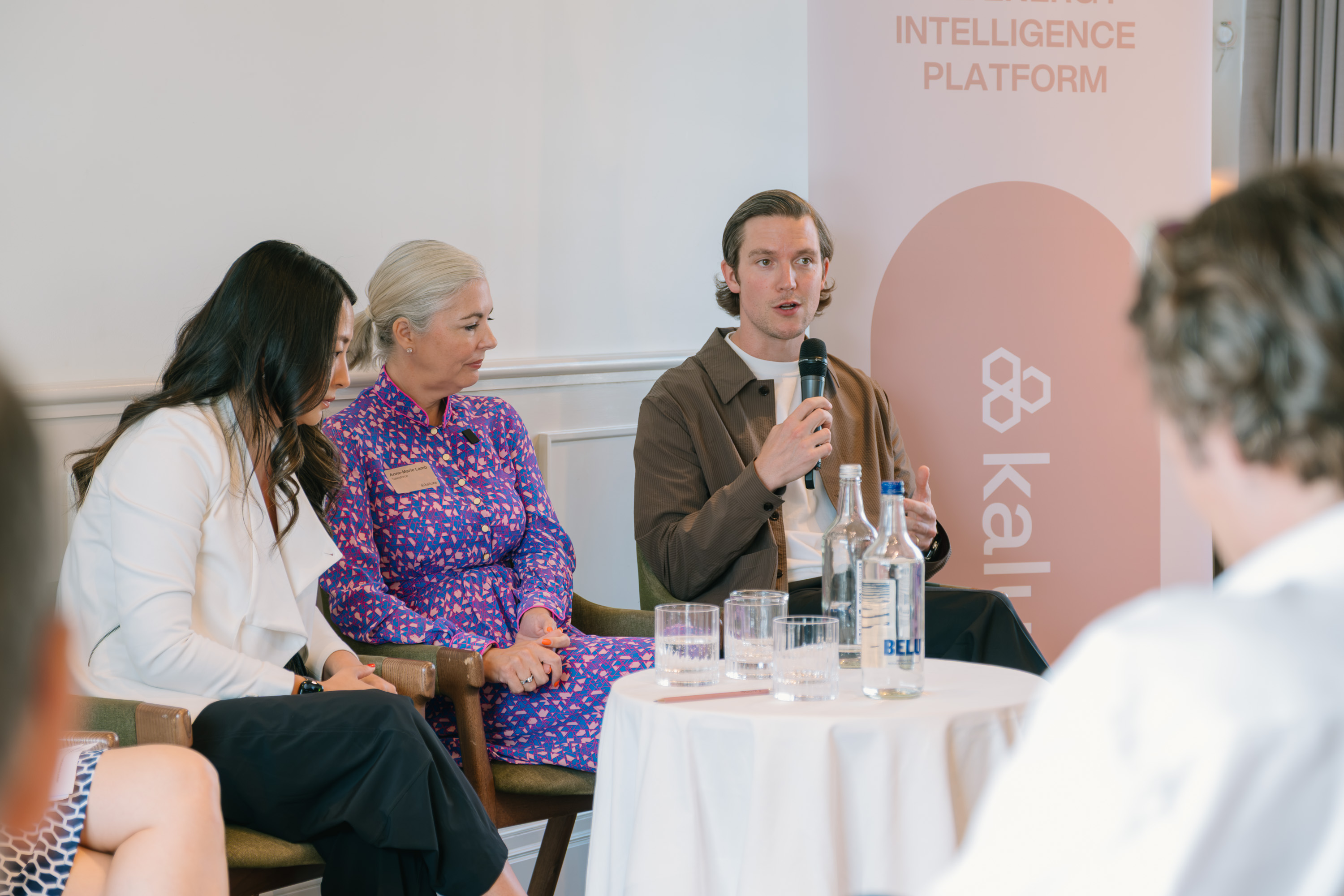
Anne-Marie Lamb, Area Vice President for Energy, Utilities, Aerospace, Defence and Manufacturing at Salesforce, brought more than 25 years of experience across cloud, AI/ML, security, ERP, and digital transformation. Paddy Morton, Head of Industrial and Consumer Markets, EMEA North at Anthropic, had 15 years of GTM experience in AI and SaaS, with deep roots in industrial and regulated sectors. Carol Yan, General Manager for Energy & Utilities UKI at AWS worked on strategic energy transition, grid modernisation, and decarbonisation initiatives for top-tier customers in power, utilities, oil and gas, and water.
Mindset shift: From ownership to intelligence as a utility
On-premise software meant you owned and ran everything. For SaaS, the customer owned the data, the vendor owned the code. In energy retail, there are three separate "owners" for one customer - the energy supplier's software, the CRM, and the cloud/AI layer. When a platform is now making autonomous decisions on a company’s behalf, it’s unclear what happens to that model.
The panel made it clear that customer relationships belong to the company using the platform, not the vendor. Companies can differentiate themselves by owning more of the end-to-end stack, so they don’t have to work with outside intermediaries. This is similar to the origin story of Kaluza, which was incubated inside OVO before spinning off to serve more of the industry.
Now, the durable assets become your context, your workflows and your data, and the model is interchangeable. The risk becomes getting locked into a certain model. Anthropic's response to that concern is open-source Model Context Protocols, or MCPs, which retain customer control of their context and tooling.
“Intelligence is becoming foundational infrastructure, just like a utility” said Paddy Morton of Anthropic. “We are able to change our utility providers, which keep companies competing for your business. Risk would come from being locked into one provider, which is why open standards like MCP are great - they keep you free to move and keep the industry competing on quality and safety."
Outcome-based pricing is appealing in theory, but messy in practice
SaaS pricing has traditionally been based on seats, or per-user licensing. Now, we are moving into a world where software stops being something your team operates and starts becoming something that acts on your behalf continuously. The discussion touched on outcome-based or consumption pricing, which create more use cases for the software but unpredictable spend.
The panellists agreed that pricing is one of the most challenging parts of this AI shift. Companies can and have been lowering the prices of their core services to compete, but the harder task is knowing who to assign value to and how to measure outcomes. Most customers want software platforms to share in the risk when things go wrong, but are less willing to pay a premium when things go right.
“Pricing is probably one of the most challenging and complex parts, not because of the pricing units themselves, but the implication around your operating model,” said Carol Yan of AWS. “What you're willing to give for what you're wanting to get is the part that's been really contentious and will continue to be contentious.”
The industry has faced tricky pricing questions before. The panellists talked about the early days of cloud, when everyone wanted it but no one had a budget for it. For now, a hybrid pricing model is more likely than a purely outcome-based one, but the market needs predictability above all.

Support services aren’t going anywhere
Service used to mean helping a team use the software. When the software runs on your behalf, what happens to that service aspect? The panellists agreed that these decisions are still very much in flux, and some customers want to have full control over the technology while others need full managed service support. The consensus was that professional services will still be needed, especially because models evolve so quickly, maintaining demand for engineering support.
“Everybody should hopefully have AI skills, especially with the availability of some of the technologies. Now anybody can learn it, they genuinely can. But the difference is if you want best in class and especially as the models are evolving so quickly and so rapidly, quite often you will need the technology providers to provide the forward deployed engineers,” said Anne-Marie Lamb of Salesforce. “Because if you're working on something that was last week, you're already out of date by the time you go live. So it's our responsibility to help.”
The discussion also circled around a theme of responsibility when things go wrong—whether it’s a small bug in the code or a major real world harm that is linked to an autonomous action. In today’s world, there is now a chain of responsibility, from the frontier model provider to the infrastructure layer, to the SaaS platform and back to the customer.

SaaS isn’t dead, after all
We're still not calling the end of SaaS. But we asked the question because the answer shapes where a strategy lead places their bets for the next five years. Yesterday’s panel made it clear that for now, it’s not going anywhere. But there’s no doubt that an AI-driven revolution is underway that will fundamentally change how companies buy, sell and use software in energy and beyond.
