Poland has been Europe's fastest-growing major economy over the past 20 years, built in part on large structural transformations. Energy is the next frontier.
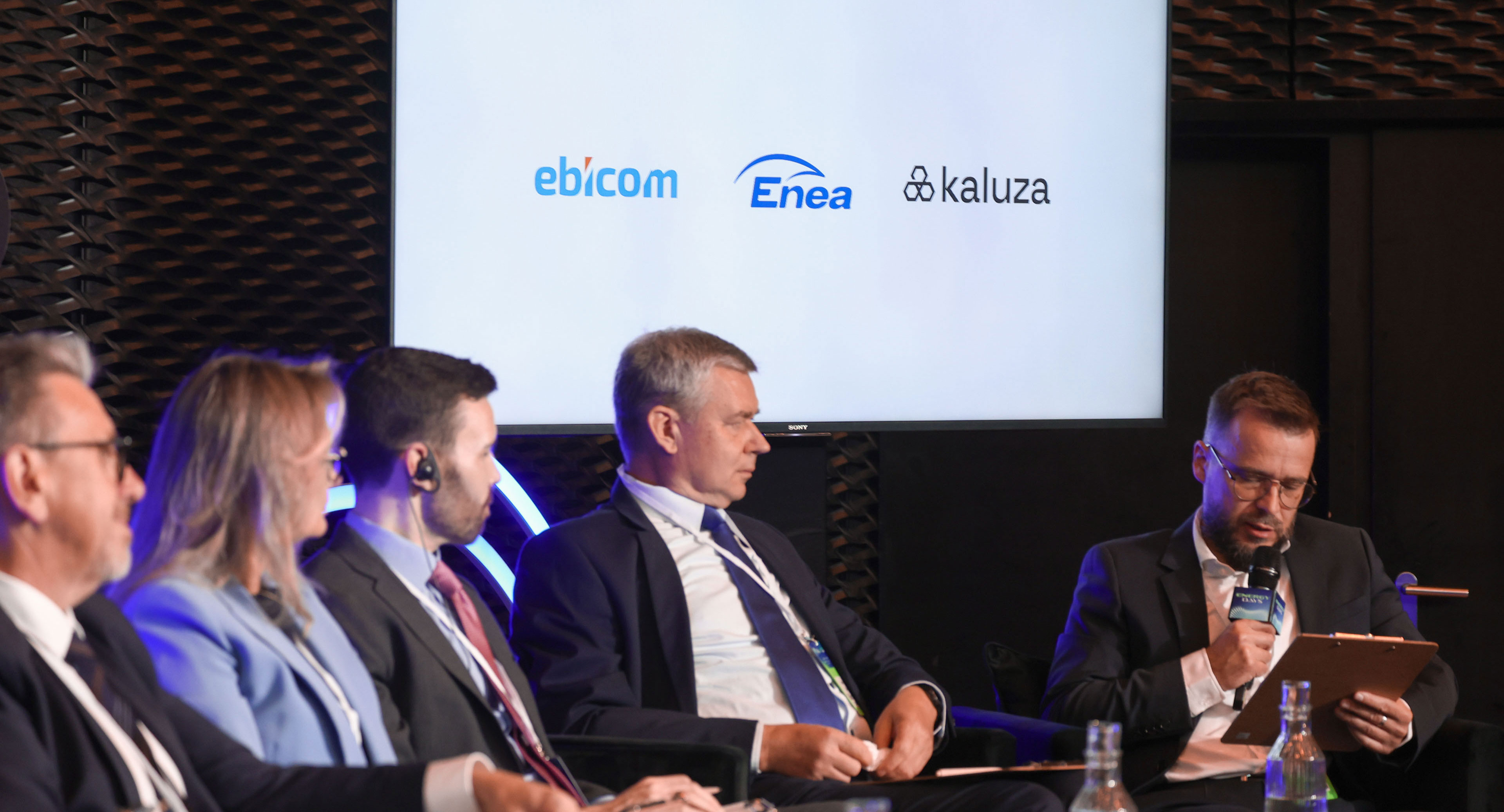
As a sponsor at this year's Energy Days event in Katowice, our Director of Partnerships, Daniel Peach was invited to speak about AI's influence across the energy sector. Daniel announced Kaluza's intended expansion into the Polish market. The market and supplies are ready, and here's why retailers need to make the most of this change.
What's happening in the Polish market
On 19 October 2026, the new statutory system, CSIRE (Central Energy Market Information System), becomes the required platform for Poland's energy market participants to run their core processes. One of the biggest changes to how Poland's retail energy market has operated in years.
In simpler terms, CSIRE will create one central digital platform, run by the grid operator PSE, where retailers, network operators and other market participants share customer and meter data and handle processes such as switching supplier. Previously, that information moved through a non-automated, separate system. By introducing a single shared system, it now means better data for retailers and a faster, simpler experience for customers.
Sources: PTPiREE, Polska Spółka Gazownictwa, PZPM and PSNM (June 2026), PZPM and PSPA (2021 baseline), URE and AVSystem (smart meter timeline).
Four shifts stand out:
- Regulation is opening up the market: Done well, CSIRE makes it far easier for retailers to launch new products and for customers to act on them.
- The customer base is large: Distribution operators served more than 19.4 million electricity customers at the end of 2025, and the main gas distributor serves around 7.5 million gas customers. There's no official dual-fuel count, but nearly every gas customer also has electricity, so the distinct total is close to the electricity figure rather than the sum.
- Smart meters are on a legal clock: Operators must equip at least 80% of end users with remote-reading meters by the end of 2028, and every customer by 4 July 2031.
- Customers are electrifying and generating: Battery-electric passenger cars grew from 18,795 at the end of 2021 to 142,130 by June 2026, and public charging points have more than tripled to 12,543. Businesses account for around 82% of the battery-electric market. More than 1.6 million homes and small businesses also generate their own power, almost all (99.9%) with solar panels.
What this means for customers
Polish customers already bank, travel and shop in apps that know who they are and respond in seconds, and they're starting to expect the same from their energy supplier. Add solar panels, a battery or an EV charger, and they expect tariffs and support that help them get the most from those devices.
What this means for retailers
Systems built for one bill a month and little competition struggle with dynamic tariffs, real-time data and personalised service. In the UK and Australia, deregulation brought competition, competition raised customer awareness, and suppliers typically looked at replatforming to ensure their future needs were met. Poland is moving down the same path, and it has a chance to leapfrog its neighbours by investing now in technology that helps energy companies keep their customers and engage them positively.
How Kaluza can help Polish retailers
As an Energy Days sponsor, Kaluza joined the AI in energy panel alongside leaders from Enea, Tauron and PGE, and the announcement that Kaluza intends to expand into the Polish market was also explained in an interview on bankier.pl. Polish retailers are heading into a more customer-centric, device-rich market, and Kaluza has seen how that transition plays out in the UK, Australia and several European markets, where it already runs at scale. It offers three proven solutions:
- Retail: billing, customer operations and digital experience on one platform
- Flex: orchestration of batteries, EVs, heat pumps and other devices
- C&I: price-to-cash processes for commercial and industrial customers
Kaluza can also bring the advanced AI use cases retailers elsewhere are putting to work, including its recent Customer Care partnership with Decagon. Questions from the room about lessons from other markets, data quality and keeping humans in the loop suggest Polish retailers are ready for that conversation.
Watch the video on Bankier.pl (in Polish): How AI can optimise Poland's energy sector and why Kaluza is entering the market.

Agility is no longer optional
Regulatory change is a certainty, and operational chaos doesn't have to follow it. With CSIRE going live, smart meters spreading and EV and solar adoption rising, the coming months are when Polish retailers choose the platform they'll compete on for years. Kaluza would like to help them choose well.
Want to talk about what's possible in Poland? Book a demo with our team