Reporting period: 1 January 2024 – 31 December 2024
Foreword from the CEO
The energy transition is no longer about producing cheap renewables – it’s about managing systemic volatility and intermittency while ensuring energy is affordable and accessible for all.
In 2024, Kaluza crossed a true threshold. Several major achievements propelled us forward, including a landmark licensing and investment agreement with AGL, multiple global Kaluza Flex deployments and our joint venture with Mitsubishi Corporation in Japan.
We recognised that our core purpose – building the Energy Intelligence that powers a sustainable, affordable, and resilient energy transition – is more critical than ever.
This report confirms that our platform is the strategic foundation required to solve this energy trilemma. In 2024, we enabled our retail clients to partner directly with consumers in ways previously unimaginable:
Grid resilience & affordability
Our platform enabled OVO in the UK to rapidly deploy solutions like the Demand Flexibility Service and Power Move, collectively helping customers save over £1.5 million and avoiding over 200 tonnes of carbon emissions by shifting load to greener times of day. We further powered innovation with the expansion of our pioneering Charge Anytime EV tariff leading to a total of £10 million in saving for end consumers by the end of 2024.
Market agility
We enabled OVO Energy Australia (OEA) to respond to unprecedented daily price volatility and negative pricing through a suite of innovative plans launched in weeks, including the pioneering “3 for Free” offer. These propositions enabled the continued uptake of domestic solar while protecting OEA from millions of dollars in unexpected costs, while providing free power to their customers.
This operational success is translating to global scale and significant acceleration.
The complexity of solving climate change requires leadership, data, and accountability, and this report is our testament to all three as we continue to build momentum towards our goal of supporting 100 million meters by 2030.
As a certified B Corp, this report confirms our commitment to transparency by disclosing our full carbon footprint and detailing our progress on Diversity and Inclusion, as we continue to work on achieving the scale we need to drive our ultimate climate impact goals.
Melissa Gander
CEO, Kaluza
2024 achievements: Laying the foundation for impact
Kaluza: powering global energy transformation
Kaluza is the Energy Intelligence Platform enabling energy providers to orchestrate a reliable, affordable, and clean energy system for everyone. We empower energy companies to unlock the full value of a changing system using real-time data and intelligent automation to transform their operations, provide personalised experiences and fast track innovation around low-carbon technologies.
Cementing global growth
Landmark investment
AGL invested $100m USD in Kaluza, securing a $500m post-money valuation and cementing our status as a software platform of choice.
Mass market scale
Signed a licensing deal with AGL (Australia) to support four million customers, US$46–60 million in operational cost cuts.
International footprint
Launched a joint venture in Japan with Mitsubishi Corporation, accelerating the commercial pipeline for electric vehicles (EV) and energy retailers.
Delivering product innovation and consumer value
Pioneering tariffs
Powered the expansion of OVO Charge Anytime (7p/kWh EV charging) and launched Battery Boost, a first-of-its-kind plan saving customers an extra £120 a year through intelligent solar battery optimisation.
Social equity
Expanded the US REDWDS managed EV charging program in California, with a commitment to supporting at least 50% of participants from low-income communities.
Market-leading assets
OVO Energy Australia (OEA) tripled its customer base and launched market-leading tariffs for EVs, solar, and battery optimisation on the platform.
Industry validation and powerful partnerships
Strategic OEM partnerships
Continued to grow the network of Original Equipment Manufacturer (OEM) partners through direct agreements with major automakers, including Volvo, VWG, and Stellantis.
Award recognition
Won Innovation and Smart Tech Project of the Year at the National Technology Awards, validating Kaluza's differentiated approach to building its partner network.
Climate performance
Our corporate carbon footprint (Scopes 1, 2, 3)
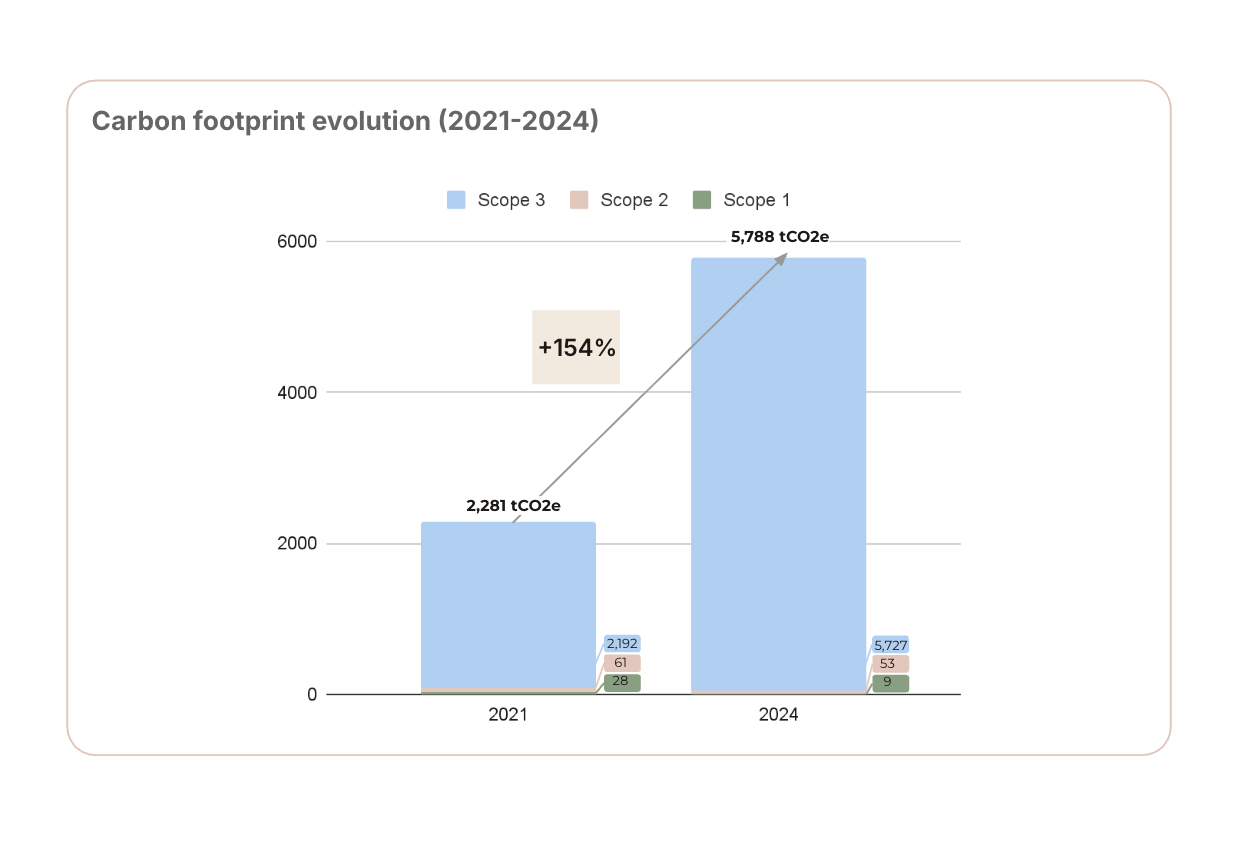
In 2024, our corporate footprint rose, as anticipated, due to rapid global expansion (e.g., Australia).
Kaluza’s carbon footprint was first calculated in 2021. We reported a detailed breakdown of our footprint and methodology in Chapter 2 of our Mission Transition strategy along with our plan for reducing our emissions.
Between 2021 and 2024, our total location-based Scope 1, 2 and 3 carbon footprint increased to approximately 5,788 tCO₂e. When we set our 2030 decarbonisation target, we expected that our footprint would rise for a few years from our 2021 baseline as we establish and scale our platform, and lay the foundation for implementing emission reduction initiatives.
Emissions by source
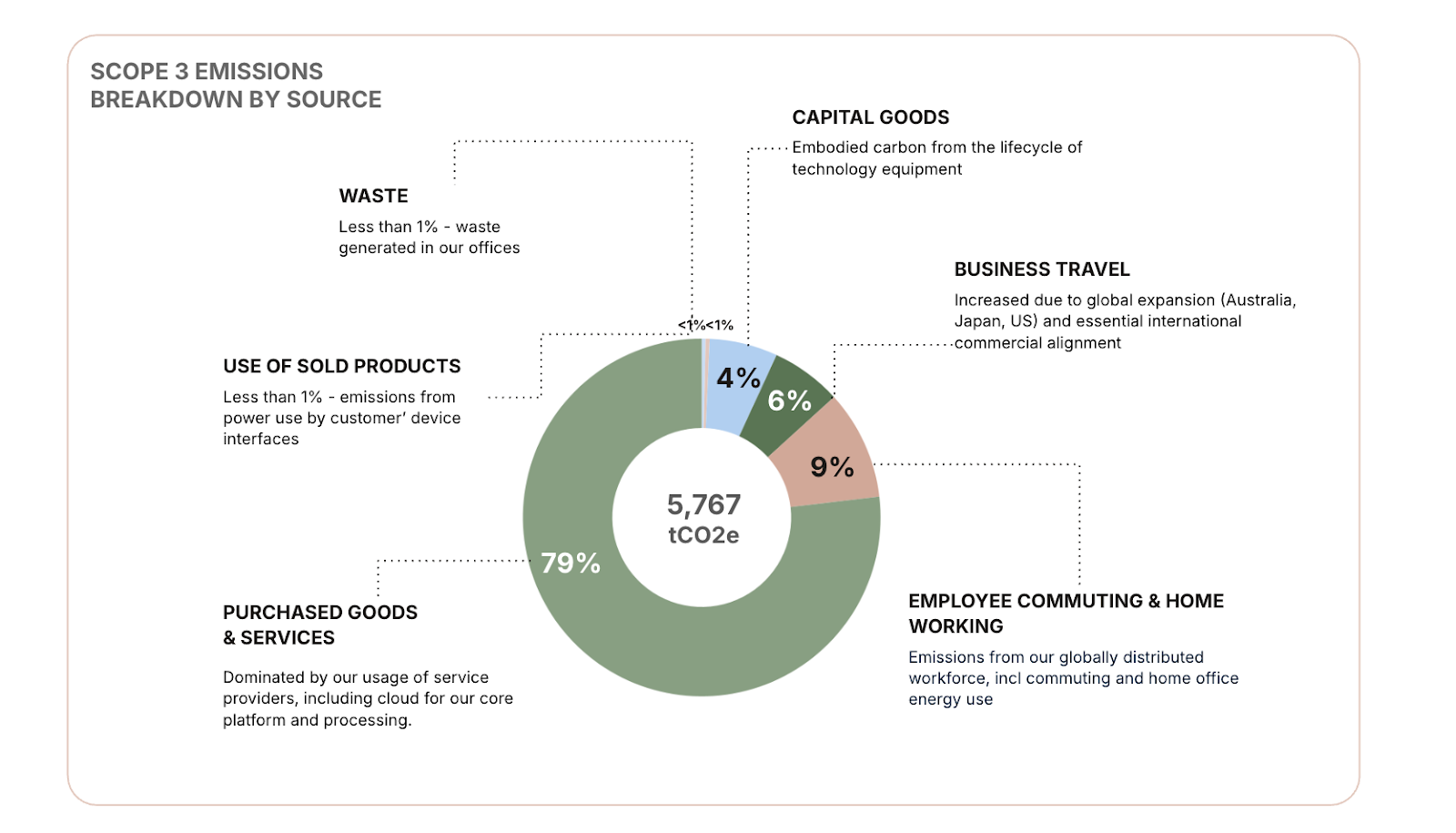
As a fast-scaling software platform, over 98% of Kaluza’s total carbon footprint is classified as Scope 3 (Value Chain) emissions. This concentration requires us to focus our strategy almost entirely on influencing our supply chain and optimising our technology.
Managing our digital footprint
As a SaaS company, over 98% of our footprint is Scope 3, with the majority from professional services, cloud compute and technology hardware.
This extreme concentration in Scope 3 is why our 2025–2030 efforts will be focused on green software operations, particularly as we learn how artificial intelligence (AI), machine learning (ML) and other technology advancements will further drive an increase in energy demand related to cloud use.
Reducing GHG emissions per meter served
Successful integration with SWEEP and our primary cloud use providers will enable us to track emissions by region and workload, allowing our engineering team to optimise resource allocation towards low-carbon cloud regions (e.g., moving specific non-latency workloads to lower emissions data centres).
Quantifying avoided emissions
Our most substantial impact lies in accelerating the energy transition. We formally committed to quantifying our positive climate impact (avoided emissions) to prove our mission. A case study by Prime Coalition is underway to verify our methodology across three high-impact areas:
- Grid decarbonisation
- Adoption acceleration
- Transition enablement
Goal: To publish the verified avoided emissions impact pathways in our subsequent report (2025).
Diversity, Equity and Inclusion (People)
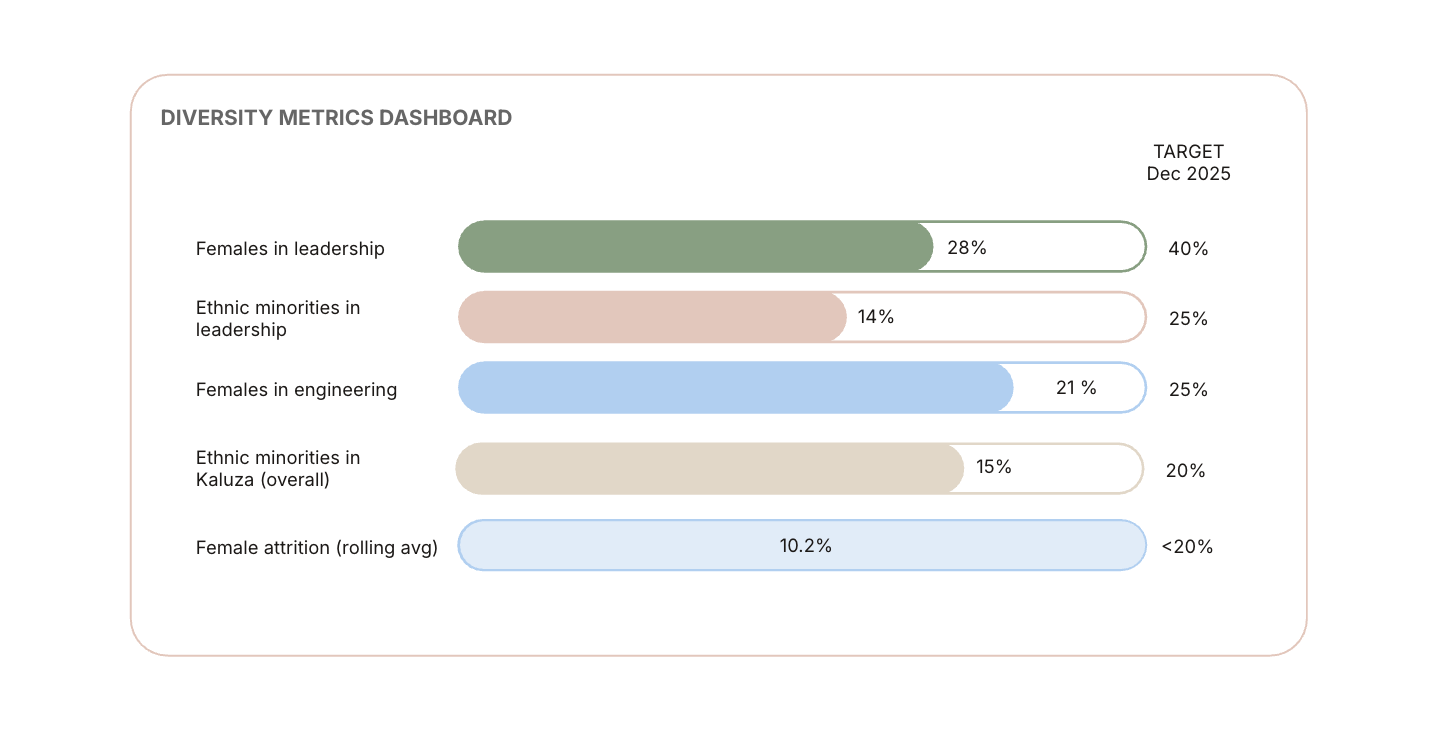
Building a diverse community and an inclusive culture is fundamental to achieving our vision. We track our progress using metrics benchmarked against the Tech Talent Charter (TTC) and our own ambitious goals, including the Powerful Women Pledge and Race At Work Charter.
Key actions taken in 2024
Talent development
Launched the Executive Mentoring Scheme (pairing Executive team members with employees from underrepresented backgrounds) and the Women in Leadership Forum to further the professional development of current and aspiring female leaders.
Hiring transparency
Mandated salary bandings on all job adverts and incorporated Inclusive Interviewing Skills into our Leadership Development Programme.
Inclusive benefits
Bolstered our inclusive policies, introducing an extra 10 days dependants’ leave, fertility checks, gender dysphoria support, and a menopause support plan.
Pay transparency and equity
We recognise that the pay gap reflects organisational distribution, not equal pay. Publishing this data holds us accountable for increasing diversity in our highest-paid roles.
Gender pay gap
The gap was negatively impacted in 2024 because the biggest rise in female representation occurred primarily in the lower pay quartiles, highlighting the time lag between entry-level diversity and senior equity.
Ethnicity pay gap
We published our ethnicity pay gap for the first time. The gap was impacted by a decrease in ethnic minority representation in the highest-paid quartile, coupled with increased representation in the lowest quartile.
For a more detailed overview of our 2024 progress, see our full 2024 Diversity, Equity & Inclusion report.
Value chain and community
Sustainable procurement
We expect all of our suppliers and business partners to act and behave in a way that upholds our values: We’re on a Mission, We Build Together, We’re Inclusive, We Make it Happen and We Communicate with Purpose.
Supplier engagement & screening
We implemented a Supplier Code of Conduct, which all suppliers are required to sign and comply with. It covers corporate integrity, responsible sourcing and the safety and wellbeing of workers in the countries where we do business.
Community engagement
Volunteering
Our global team dedicated 84 employee volunteer days to local community and environmental projects.
Looking ahead: Accelerating towards 2030
With exciting global scale comes new responsibilities. We recognise that our rapid global expansion has increased our corporate carbon footprint, a challenge we are meeting head-on through a steadfast commitment to green software operations and rigorous supply chain engagement.
As we navigate the rising energy demands of technologies like AI and machine learning, our focus remains on decoupling our growth from our emissions, ensuring that every meter we serve is supported by the most efficient digital infrastructure possible.
Looking ahead, our trajectory is clear. We are accelerating towards our goal of supporting 100 million meters by 2030, driven by a diverse and inclusive community that reflects the customers we serve and the organisations we partner with. By formalising our approach to verified avoided emissions in the coming years and holding ourselves accountable to the highest standards of transparency, we are not just building software; we are powering a sustainable, affordable, and resilient energy transition for everyone.
